
Detectives Need Fiction Writers
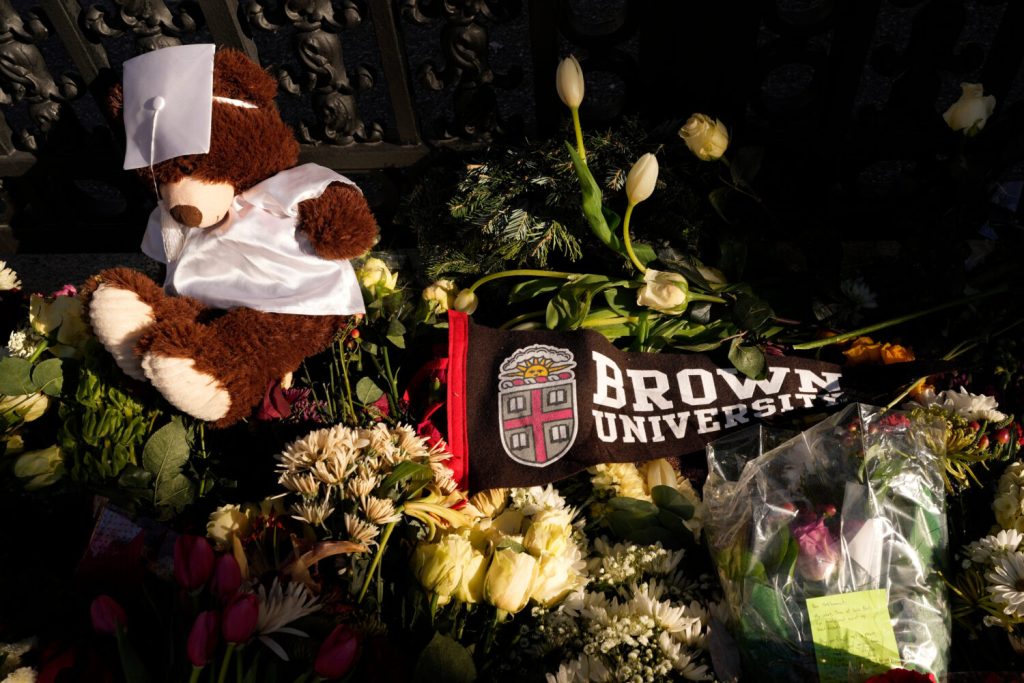
There’s been a lot of commentary written about the tragic Brown and MIT shootings the past two weeks. As we struggle to process the traumas, the anthropologist in me is also struggling to make sense of the reporting.
Some of the commentary was spot on, some of it was wildly off the mark. Across all varieties, I’ve noticed one striking absence.
Most of the speculations focused relentlessly on who, what, when, where, and, especially, how. Americans, after all, are famous for our pragmatism. So perhaps it should not have surprised me that few commenters speculated about why.
Those who did consider motives tended to gravitate toward one of two well-trafficked political fears hauled out in a generic scenario. Either the crime was committed out of anti-Semitism or Islamophobia — the two currently-dominant narratives in the U.S. that, while not entirely isomorphic, might productively be seen (for, ironically, linked reasons) to loosely occupy opposite sides of the same fear-of-the-other coin in America.
What I didn’t see in the press, early on, was much speculation about motives based in biography that could have led this particular killer to these particular crimes in these particular places. Even if one of those two prevalent political motivations proved relevant, why those two sets of targets?

The only person I heard speculating about such biographical niceties from the moment the news broke was my writer–husband.
The author of two novels and two collections of short stories, along with three memoirs and dozens of short essays about the craft of writing, Philip Graham has taught hundreds of creative-writing students across a forty-year teaching career. Always, his lessons begin with character. When mysterious motives frustrated or confused a student’s classmates, Philip was on it.
So, as soon as the barest details of the Brown massacre were announced, my husband grabbed onto any scrap of reported life history to imagine the killer’s motives. One detail was circulating in worried Jewish circles that, in search of a biography, Philip tentatively expanded on. The economics professor whose lecture room on the Brown campus was invaded was a specialist in Israeli social issues. If those brutal killings of two students, and wounding of nine more, was motivated by anti-Semitism, it would make sense that the killer targeted not only any Jew, but a Jewish professor who teaches Jewish studies. And not only any Jewish professor teaching Jewish studies, but the professor who teaches the single-most popular class on the Brown campus (Introduction to Economics), in which some 50% of all Brown students enroll.
Still, there are plenty of Jewish studies professors on campuses across America. Brandeis, for one, is just up the road, with one of the most robust Jewish studies programs in the country. So, why Brown?
In the absence of any relevant information, online speculation focused overwhelmingly on other questions.
How had the shooter escaped, after doing his murderous deeds? Weren’t there video cameras in the building, and on the street, that captured his image? How many video cameras are installed on the Brown campus, anyway? Were they all turned on, and functional? Is anyone combing through their footage?

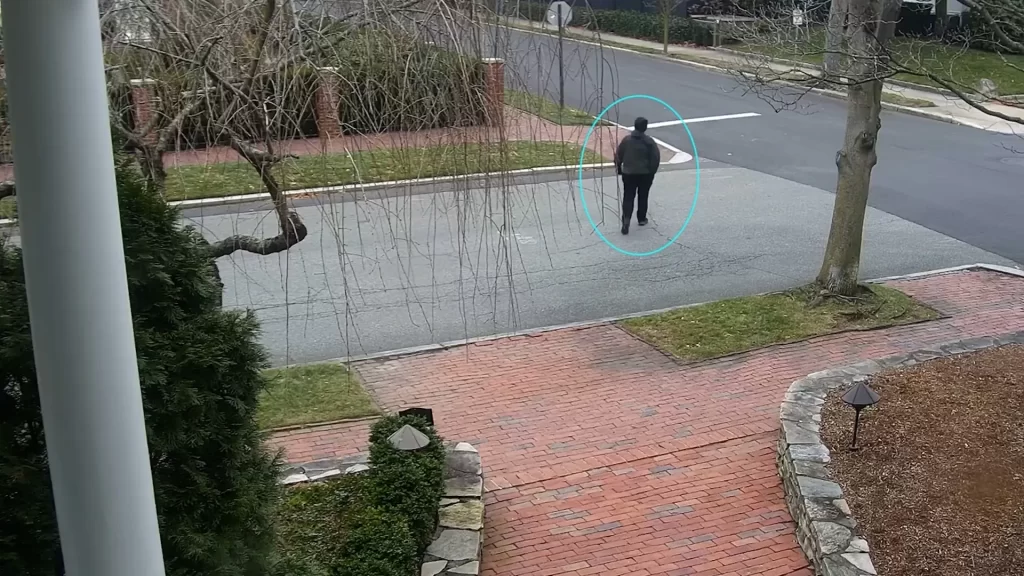
Finally, some grainy footage was released of a man seen repeatedly walking up and down the streets in the vicinity of the building that was the site of the campus rampage. That footage was time-stamped at various points before and after the event. Could AI enhancement clarify this individual’s profile? These and other technical questions obsessed journalists, investigators, and the general public for two days.
On the Islamophobic side of the political divide, conspiracy theorists found doctored videos of the alleged suspect who they swore looked like a Middle Eastern man. Then, they went to town. Someone found an image of a Middle Eastern male student at Brown whose physique seemed to resemble that of the suspect. Suddenly, we saw a digital lynch mob go into action. Without imagining the effects on this unsuspecting student, people with tens of thousands of online followers posted details of this innocent student on social media, activating a new kind of digital violence of the sort that only the Internet age can produce. And, still, no intelligent ruminations about the criminal’s motives.
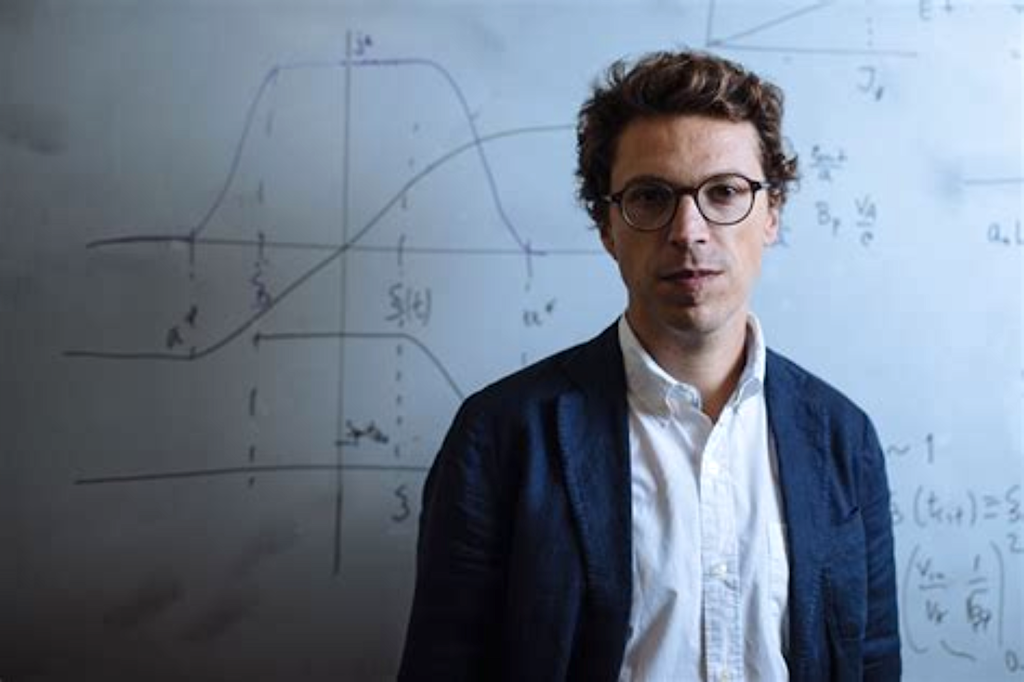
Meanwhile, 45 miles north, another horrendous murder occurred. This time, the victim was a highly respected and beloved MIT professor. Could there be any link between the two murders? The Providence police chief and Attorney General of Rhode Island immediately denied it. “No known connection,” they asserted.
“Really?” my writer-husband mused. “Two elite campuses in New England targeted within two days? No way that’s a coincidence. Maybe this shooter has some grudge against Brown University and the MIT professor.”
What did we know about Dr. Nuno Loureiro, the unfortunate MIT professor?
Jewish speculation zeroed in on claims that Dr. Loureiro might be Jewish. Now my writer-husband’s imagination went to town. Maybe the killer, an anti-Semite targeting the Brown professor because of her Israeli research, knew her study session would be meeting in that large lecture room, and he could target her there. But when the killer burst into the classroom, my husband reasoned, the murderer would have been disappointed to find a teaching assistant leading a study session — no professor in sight. Frustrated by his miscalculation, the assassin would have pulled the trigger to shoot anybody he could.
Where else could the murderer find a more appropriate target? The maybe–Jewish professor at MIT, it was reported, had supported Israel. This time, the killer would take no chances. Instead of miscalculating in which classroom his new target might or might not be teaching, the killer would go to the source and shoot him at home. My husband’s new theory had only a few facts and unsupported rumors to go on, but at least this was a story that made some possible psychological sense.
Until it didn’t.
New facts emerged that suggested new narrative pathways for a character-driven story.
A local witness-who might-or-might-not-be-homeless (reports varied) posted tantalizing observations on Reddit, of all places. This fellow had seen that suspicious-looking guy from the video walking back and forth on the streets around the targeted building. It took a couple of days for the Brown police to locate the witness, but when they did, the witness supplied enough details that the detectives could do what detectives do best. Meticulously, they pieced together times, financial and legal records, and memories. That led them to the person who had rented the car approached by the suspect, as spotted on campus by the witness. The car rental record led them to a name. And, as Rhode Island’s attorney general declared with confidence, once you have a name, you can find anyone.
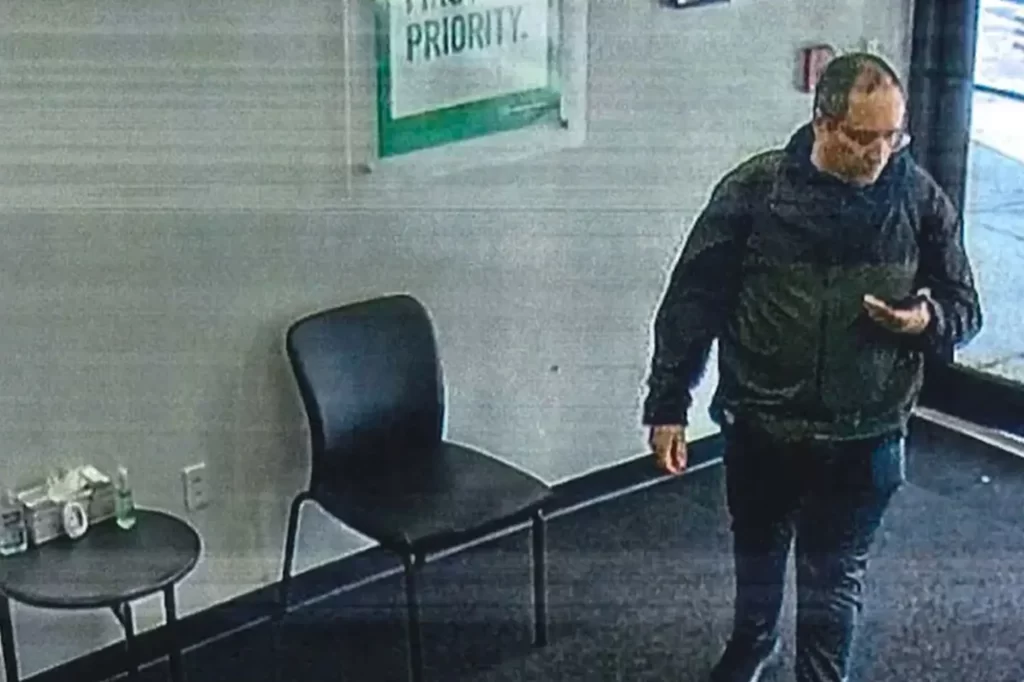
Moreover, that name yielded all sorts of new information.
In a press conference, Brown’s president revealed that the shooter had once been a student at Brown. But that was 25 years ago, she hastened to point out. He had enrolled in 2000, but then he took a leave of absence before the end of his second semester, and he never returned. Insisting that the shooter had no current connection to Brown, the university’s president — no doubt, eager to save Brown’s reputation as a safe space — implied that the decades-long gap between the murderer’s enrollment and his crime must mean that having chosen to kill people on the Brown campus was purely arbitrary, since he had such a brief engagement with Brown, and so long ago.
“Hmmm,” muttered my husband. Perhaps something traumatic occurred at Brown that the murderer thought ruined his life. You don’t drop out of an Ivy League University for no reason. “What happened to him in that program 25 years ago?” Philip wondered. “And why did it take him so long to act on his resentment? There’s some unidentified passion here.”
Being willing to imagine, re-imagine, and re-re-imagine any character’s motivations is a classic technique honed by fiction writers. William Faulkner once told West Point students about his writing process: “It begins with a character, usually, and once he stands up on his feet and begins to move, all I can do is trot along behind him with a paper and pencil trying to keep up long enough to put down what he says and does.”
So, what was that gunman studying at Brown, anyway?
Oh, he wasn’t an undergraduate student. He was enrolled in a Ph.D. program — in physics.
Wait, said Philip. That MIT professor was a physicist. Maybe they knew each other.
Then, it turned out the shooter was Portuguese. The MIT professor was Portuguese. New connect-the-dots facts called out.
The suspect was 47, the MIT professor was 48. My husband revised his story. As we knew firsthand from a year spent in Lisbon, the world of academia in Lisbon is small. As Portuguese age-mates, now it seemed almost impossible that the professor and his killer didn’t know each other.
The suspect had enrolled in a doctoral program in physics at Brown in 2000. The MIT professor was a physicist. As an age-mate, he, too, must have been enrolled in some physics program somewhere around 2000 as well. In fact, he had enrolled in a doctoral program at Imperial College London.
After Valente dropped out of Brown, he returned to Lisbon for 16 years. But, in 2017, he won the Diversity Visa Lottery and returned to the U.S. That was a year after Loureiro joined the faculty at M.I.T. Another non-coincidence, my writer-husband was convinced.
Philip revised his story again. “I think it’s about professional jealousy.”
Finally, new details surfaced in the Portuguese press that corroborated this intuition.
As a high school student, Valente was so promising that, at 17, he was selected to participate in a physics competition in Australia. And, he had a GPA of 19. That’s on a scale of 20. In Portugal, no one gets a 19. Or, pretty much no one. An average of 10/20 is considered a passing grade, and that’s utterly respectable. Anything between 10 and 12 is considered just fine, while 13 to 15 is impressive. 16 to 18 is exceptional, and 19 only comes along maybe once in a generation. 20 is pretty much reserved for God.
It would have been unlikely that two physics students in the same year would have achieved GPAs of 19. Since Valente had a 19, maybe Loureiro had a more-than-respectable 18. And yet, Loureiro wound up as an MIT professor, awarded just last January the Presidential Early Career Award for Scientists and Engineers by President Biden — the highest honor any young, US-based scientist might be given — while the killer had no career as a physicist that anyone knew about. Valente’s resentment and jealousy must have been unbearable. And, it must have lasted 25 years, worsening every year, with every new article that Loureiro published, every new prize he was awarded.
But what happened back in 2001 that propelled Valente to drop out of Brown in the first place, and abort his promising career?
A long-ago Portuguese classmate of his recalled that Valente was not only brilliant, he was also arrogant. According to his high school friend, Valente always thought himself smarter and better than anyone. At Brown, that friend recalled, Valente derided his classmates, who he thought were beneath him. Valente must have had a very high IQ, but a very low EQ. And high academic intelligence combined with low emotional intelligence can be a dangerous combination.
Plus, at Brown, Valente apparently struggled to adapt to life in America. As an anthropologist, I can attest to culture shock as a daily challenge that needs constant TLC.
No doubt there are details about those cultural challenges facing the arrogant Portuguese student in America that we will never know. But now, it’s a story that adds up, if in a gruesome and tragic way — an all-too-human story about the struggles of person and culture, ambition and opportunity, time and circumstance.
My writer-husband sadly observed: After dropping out of Brown, Valente had only his resentment to live for, and eventually that was his undoing.
My what-if regrets: If the detectives had asked different questions early on, might they have used their awesome technical skills to catch the killer before he murdered his second target, his long-ago rival?
And, my educator’s takeaway: Any high school student who plans to go into law-enforcement with the goal of becoming a detective should choose a college major carefully. Sure, they can take classes in law-enforcement, learn the tricks of the latest forensic technologies, and watch endless reruns of Law and Order or CSI. All those skills will, doubtless, help them solve the who, what, where, when, and how of crimes they need to solve.
But the major that might best train them about why — to imagine plausible stories that explain the mysteries of the humans who produce the need for detective work?
It just might be Creative Writing.
I threw my hands into the air and said “yes” as you wrote about professional jealousy as a motive for murder.
Have we not seen this kind of jealousy in various novels (and not always leading to murder), e.g. Alison Lurie, Donna Tart, Richard Russo’s brilliant The Straight Man which made me laugh out loud,TV shows (most recently The Chair), and all kinds of murder mysteries, none of which I can remember? Have we academics not experienced that kind of jealousy coming from our colleagues (I certainly have)? Like Phillip, as soon as I heard they were both at that high-achieving school in Portugal, I knew it was jealousy.
This is a beautifully written analysis, as if Dr. Gottlieb were not just an anthropologist but a detective as well. But then, she is trained to listen to someone else’s perspective, motives, and beliefs and then piece them all together, and here it is….also proving Phillip Graham is not just a great writer but an accomplished observer (and philosopher) of human behavior.
Thank you for this generous reading. Indeed, professional jealousy is nothing to be trifled with. As if we in academia didn’t already know.
Wonderful analysts and writing Alma. Deserves a wider audience! Next time, The Atlantic?
Thank you for your wildly enthusiastic comment, Jane! I’ve never tried the Atlantic, but maybe I should . . . Appreciate your support!