
The Cape Verde Phenomenon: Underdog of Underdogs
Last Monday, I watched the riveting Cape Verde vs. Spain soccer match in a pub in central London as the World Cup debutantes shocked sports enthusiasts with a 0-0 draw. There, I saw fellow pub-goers move from having no idea what or where Cape Verde is, to becoming passionate fans.
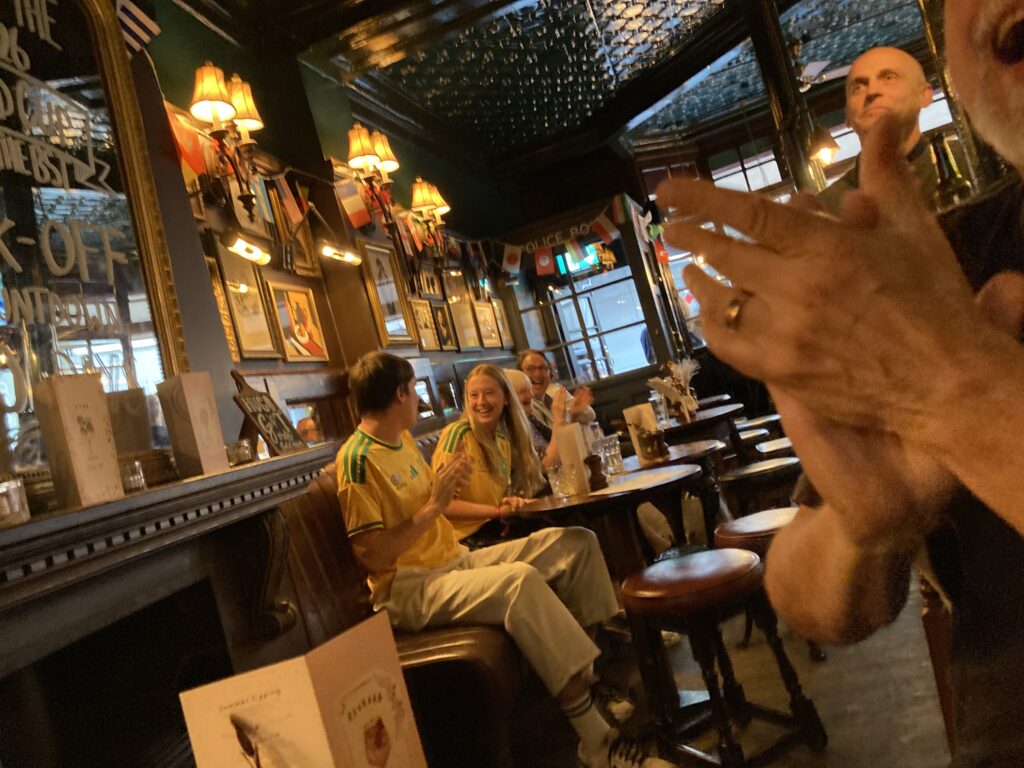
That small pub crowd was a microcosm.
The soccer world has Cape Verde fever this week.
And, for good reason.
The island nation located some 350 miles off the coast of West Africa’s Senegal has barely more than a half-million residents. Until this week, all but the most diehard geography nerds would have been hard-pressed to find the ten Cape Verde islands on a map. Even journalists have gotten it wrong. I saw one Boston-based journalist claim Cape Verde is “in South Africa,” while a TV news anchor’s map placed it on another continent entirely — in South America.
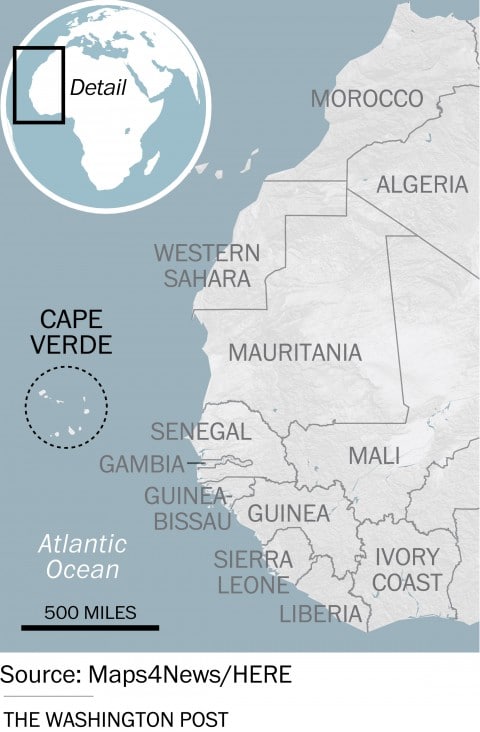
None of that surprises me. Even living in Rhode Island — the U.S. state with the largest per capita population of Cape Verdeans — I am often greeted by confusion when I tell people that I conduct research with Cape Verdeans.
“Do you mean Cape Cod?” is a frequent response.
An Instagram post by a Cape Verdean friend last week seems to sum up what Cape Verdeans everywhere are now experiencing:
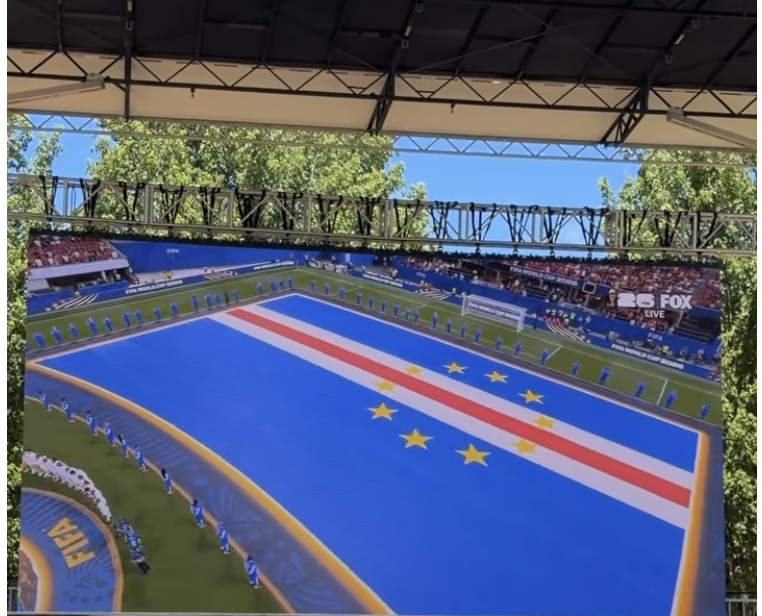
“I’m never going to get over seeing the Cape Verde map on
everyone’s TV screen!”
The soccer world is especially enchanted by the team’s until-recently-unknown goalkeeper nicknamed Vozinha. To the Spanish team’s dismay, Vozinha heroically fended off seven serious would-be goals attempted by seven different fierce opponents in his country’s first-ever World Cup game.
What a difference 36 hours makes. The morning after that achievement, Vozinha had gone from 50,000 to nine million Instagram followers. Make that 15.8 million now.
Much has already been written by sports journalists about this charming, come-from-nowhere story. After all, the professional betting establishment had predicted that Spain had a 99% chance of beating Cape Verde in that game. Who doesn’t love an underdog?
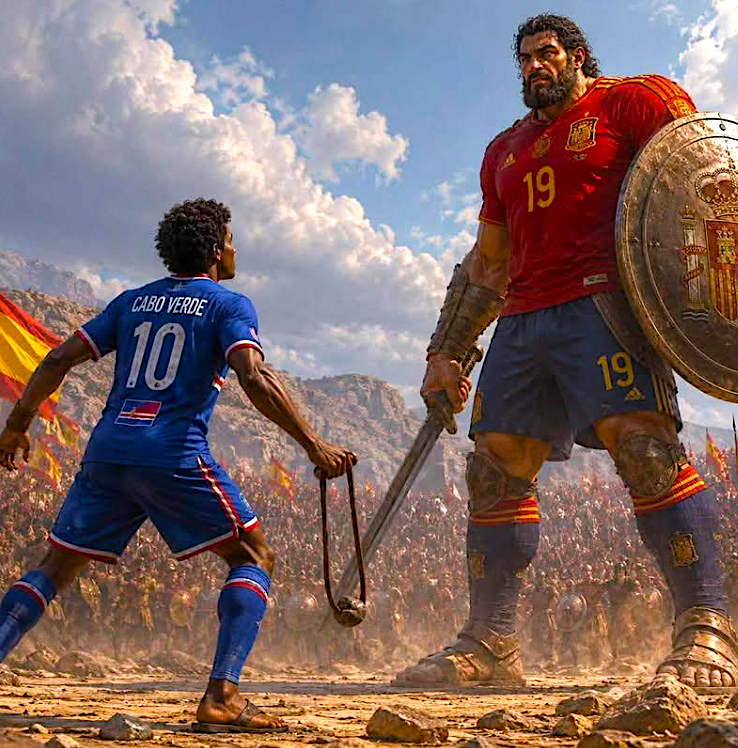
The Cape Verdean blogosphere was immediately filled with striking images and ecstatic messages. The one of Cape Verde as David and Spain as Goliath is probably my favorite.
Ever since it was announced that their national team had qualified for the World Cup, Cape Verdeans everywhere have talked of little else.
Cape Verdeans surely know what Nikki Giovanni meant when she once wrote: “You’ve got to find a way to make people know you’re there.”
Until this week, every Cape Verdean I know in the U.S. has lamented feeling invisible. That invisibility is founded in a history that is, truly, unique. Their society was created on islands that were uninhabited by humans before Portuguese navigators discovered them in the 1450s. From there, the Portuguese set about settling the islands, with a mixture of Portuguese and other European adventurers, Jewish refugees fleeing the Portuguese and Spanish Inquisitions, and, increasingly, Africans kidnapped by a growing class of career slave traders. A volatile mix of peoples produced what historians consider the first truly “creole” population of the modern world. The historian Tobias Green considers Cape Verde the place where “we” became modern.
Yet, ironically, in the U.S. in particular, their uniqueness normally renders Cape Verdeans invisible. Typically, Cape Verdeans in the U.S.:
- speak some level of Portuguese, which may sound like Spanish but isn’t
- speak Cape Verdean Kriolu, which may resemble Haitian Creole but isn’t
- also speak French, Italian, Dutch, or some other unexpected language, learned in Europe before emigrating to the U.S.
- identify as immigrants and often live in largely immigrant neighborhoods, isolated from “mainstream” American society
- often identify as mixed-race in a country that normatively defines race as black-or-white
- see themselves as different from African-Americans, citing their earliest ancestors who arrived not enslaved, but as sailors recruited to whaling boats based in New England
- hide, if they become undocumented by overstaying short-term visas in a country that is increasingly hostile to that status
- inhabit multi-generation households in a country that prizes the nuclear family
- are Catholic, unlike the majority of other Afro-descended Americans who are Protestant
- may realize that they have Jewish ancestry, while not always embracing an Afro-Jewish identity
When these factors combine, they produce an identity that, for many Cape Verdeans, simply renders them hard to categorize — even “illegible.”
A Cape Verdean-American woman once recounted to me:
With my look, people always say: “I’ve seen you somewhere, I’ve met you somewhere.”
I don’t know what it is. When I go to Florida, people start speaking to me in Spanish — [to them] I
look Spanish. When I went to Montreal, people started speaking to me in French. When I went to
Tennessee, an African American gentleman who thought I was beautiful just said, “What the heck
are you?”
“What are you?” is, indeed, a common question asked of many Cape Verdeans in the U.S., often accompanied by a look of genuine confusion. The title of an acclaimed film by Cape Verdean-American filmmaker-historian, Claire Andrade-Watkins, “Some Kind of Funny Porto Rican? A Cape Verdean American Story,” speaks to many Cape Verdeans in the U.S. who are not easily categorized.
Taking such confused reactions in stride is part of what defines the daily experience of Cape Verdeans in the U.S. That nonchalance is historically rooted. Cape Verdeans delicately and, often, graciously balance multiple ethnic, racialized, and religious selves. As such, as I suggest in the book I have just completed writing (Africa across the Seder Table: Conversations about Jewish Identity in Cape Verde and Its Diaspora), Cape Verdeans offer a model by which others in the modern, globalized world might approach diversity. Their seemingly obscure outpost of the Black Atlantic may represent, at once, the spectacular failures and inspiring promises of the modern condition — both the epitome and the promise of what happens to our species when difference claims a key part of our identity.
Meanwhile, against all odds — and, literally, overnight — sports fans everywhere have heard of Cape Verde. And that’s a lot of people. FIFA is projecting that “approximately 6 billion people will engage with the tournament in some form across traditional broadcast, streaming, digital platforms, and out-of-home viewing — a figure that would make it the single most-watched sporting event in the history of global media.”

It’s ironic that Cape Verdeans have felt invisible for so long. In the 16th and 17th centuries, they were at the center of world trade. Tragically, that trade involved commerce in humans. For the first century-and-a-half of what became the trans-Atlantic slave trade, the Cape Verde islands stood at the crossroads of Africa, Europe, and the Americas. During that era, probably most kidnapped Africans passed through those islands before being forced into the treacherous Middle Passage. Then, France and the U.K. battled for domination of the ignominious role of trafficking in humans. But, beyond Cape Verdeans themselves, their position in that early history is now entirely forgotten.
After relinquishing their place in the slave trade, the islands were rediscovered by the global whaling industry. Starting in the late 18th century, Cape Verdean men eagerly volunteered as sailors for the whaling ships whose captains recruited cheap labor up and down the Atlantic. After two years at sea, these sailors could claim citizenship in the U.S., stepping onto land at the New England port where their ships docked.
From there, they began bringing over their families — spreading, especially, across southeastern Massachusetts and Rhode Island. In the 19th century, Cape Verdean laborers picked the bulk of the cranberry crop growing on Cape Cod. The cranberry sauce that graces most Americans’ Thanksgiving tables owes its life to Cape Verdean chain migration.
Today, the heart of the Cape Verdean community in the U.S. is still in New England. A Cape Verdean man living in Lisbon once told me:
“Boston is basically a suburb of Cape Verde.”
The islands that Portugal both colonized and impoverished have offered equal doses of charm and misery. So, as much as they love their homeland, Cape Verdeans think diasporically. Those islands in the Atlantic that might seem isolated are, for Cape Verdeans, anything but. Every Cape Verdean I know has relatives on at least three continents.
Online, Vozinha’s Instagram motto for himself is:
“Never forget who you are, and where you came from” [my translation].
That life philosophy could stand in for much of the global diaspora of Cape Verdeans.

Consider this quintessential Cape Verdean diaspora story. Before their World Cup debut, the Cape Verde team played a “friendly” game against Bermuda in Hartford, Connecticut to get some stress-free practice in. Some 10,000 diasporic Cape Verdeans from across New England showed up for that game.
No wonder brilliant Coach Bubista recruited his national soccer team globally. Fewer than half the current team was born in Cape Verde. Of the fourteen players from the diaspora, six are from the Netherlands (Rotterdam has a large Cape Verdean community), while another eight were born in the United States, Ireland, France and Portugal.
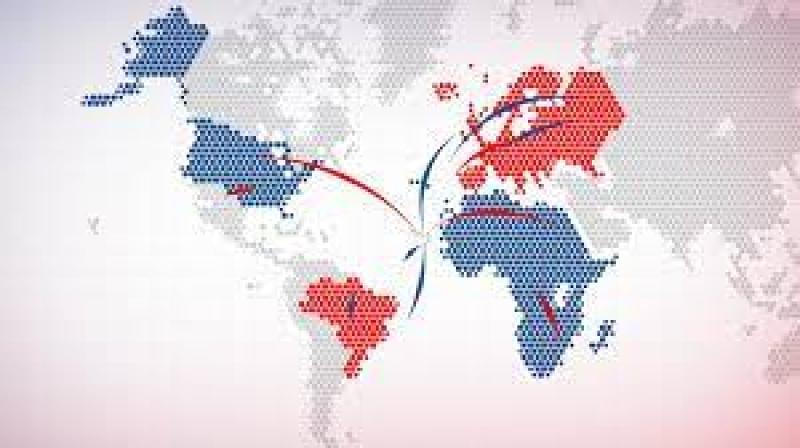
Those fourteen players are part of a global diaspora that, by some accounts, is equivalent to up to twice the population of the islands. A new project by the nation’s National Statistics Institute (funded by the World Bank) is finally mapping the global Cape Verde diaspora.
The takeaway lesson from the remarkable Group H games played so far in this season’s World Cup?
“Putting Cape Verde on the map” means highlighting not just ten tiny islands in the Atlantic, but a big chunk of the world to which those islands are connected—and, have been since the mid-15th century.
But, enough of me. I’ll give the last word to a popular image I’m seeing across the rapidly expanding Cape Verdean blogosphere: