
Courageous Ethnography: Anand Pandian Explores the Dark Underside of the American Experiment
November 9th, 2016 found me as shocked and depressed as any Hilary Clinton supporter — and not only because the xenophobic, racist, sexist, and generally despicable Donald Trump had just been declared the winner of the U.S. presidential election. The anthropologist in me was also alarmed for my discipline.
We anthropologists are supposed to understand the hidden architectures of any society, including our own. We should have seen it coming.
And, armed with our special gifts for understanding “others,” we should have advised Democratic strategists in how to speak to potential Trump supporters in ways that would make sense to them.
How had we failed to predict, even help prevent, that nightmare victory — and, later, its equally shocking 2024 successor?
We must have been as wrapped up as other Americans in our own socio-political bubbles.
Going forward, who among us would be brave enough to conduct the sort of nose-to-the ground ethnographic fieldwork with Trump voters that would empathically catalogue their fears, hopes, and anxieties? Surely, not I. But, just as surely, that research needed to be done.
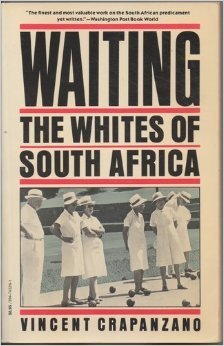
Inspired, perhaps, by Vincent Crapanzano who authored the brilliantly disturbing Waiting: The Whites of South Africa in 1986 (before apartheid was dismantled in 1994), would any of us dare undertake such emotionally challenging work?
Enter Anand Pandian.
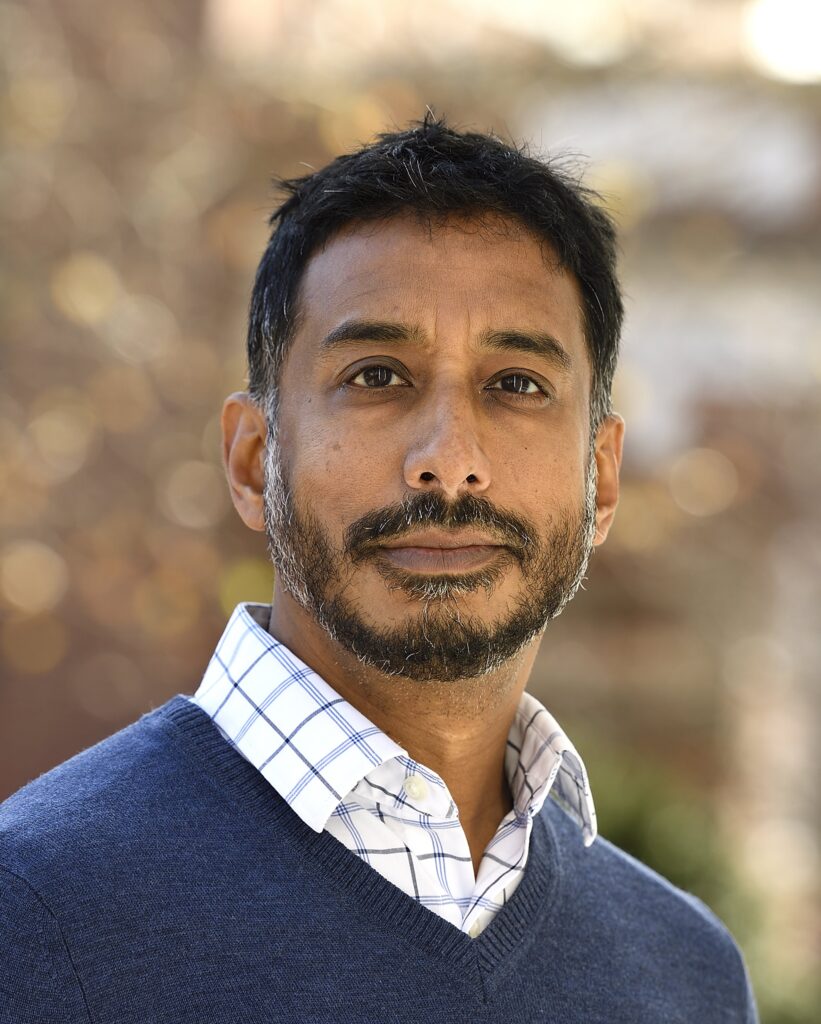
Following the announcement of Trump’s first presidential victory, Anand must have had similar morning-after thoughts as mine. But while I merely threw my heart into endless protests, occasionally memorialized in blog posts, Anand decided to do some serious ethnography. Over the next nine years, he crisscrossed the U.S. to speak with “coal rolling” truck drivers and managers of bottled water plants; he attended home builders’ trade shows and White nationalist rallies. Recently, he chronicled those extraordinary encounters in his brilliant book, Something between Us: The Everyday Walls of American Life and How to Take Them Down. His goal — perhaps utopian? — is, as he puts it, “to move toward a spirit of communal caretaking.”
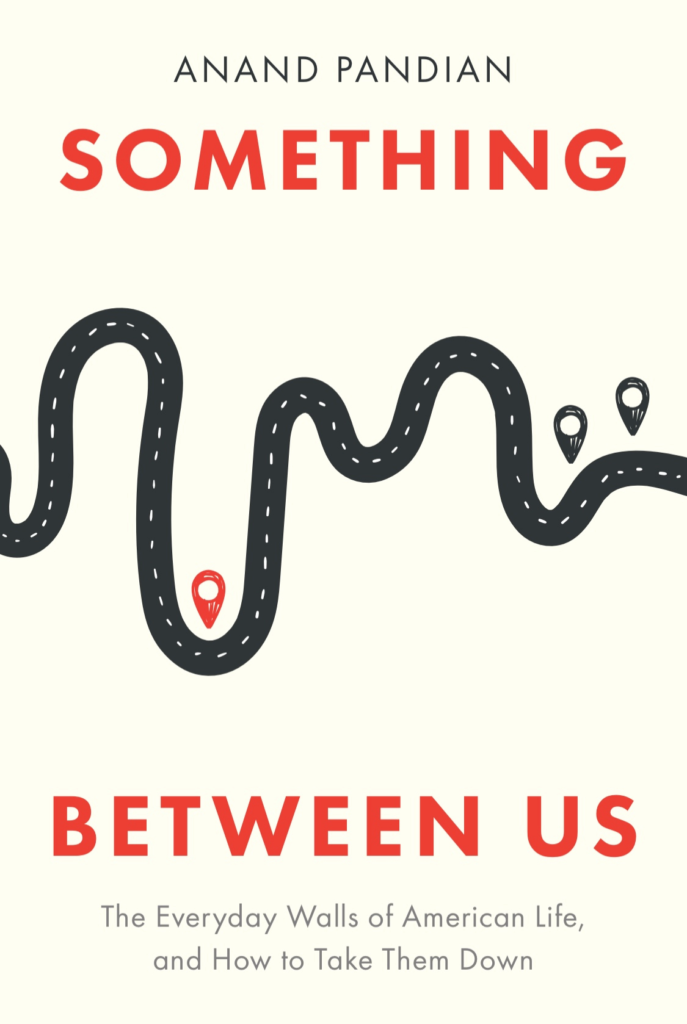
The book has already made quite a splash. Published by Stanford University Press in 2025, it received a starred review in Publisher’s Weekly, and it recently won the Zócalo Book Prize, awarded by Zócalo Public Square, a unit of ASU Media Enterprise.
You can find the publisher’s page for this marvelous book here; online booksellers stocking the book include Bookshop.org, eBay, Barnes & Noble, Apple Books, and Amazon.
Anand Pandian received his BA from Amherst College and his PhD from University of California at Berkeley. He is Krieger-Eisenhower Professor of Anthropology at Johns Hopkins University, where graduate students are currently lucky to have him serve as Director of Graduate Studies. Anand’s campus website is here.
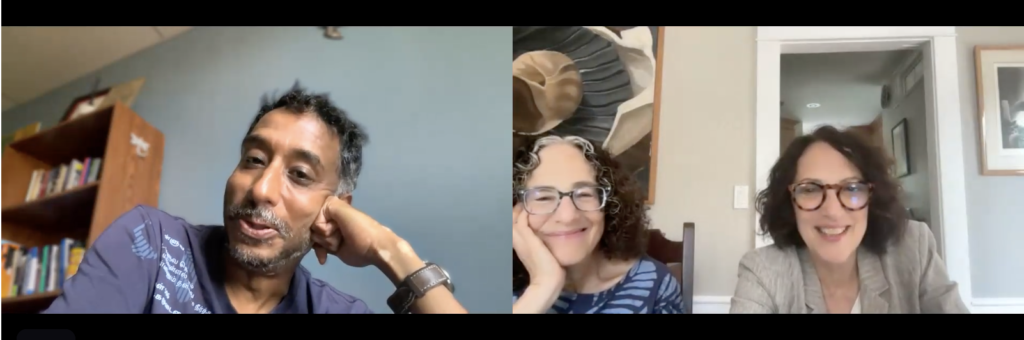
For this conversation, I’m trying something different. I’ve invited my colleague, friend, and summertime neighbor, Claudia Strauss, to join me in this interview with Anand Pandian about his new book.
As it happens, Claudia — whom I’ve recently interviewed about her own fabulous book, What Work Means: Beyond the Puritan Work Ethic — is currently conducting new research on issues orthogonally related to those that Anand broaches. (Claudia is interviewing the large swath of Americans who categorize themselves as either politically not active, politically non-aligned, or both.) So, it made good sense to join forces for this conversation.
We conducted our conversation over Zoom; what follows is a transcript that I’ve edited in minor ways for clarity and continuity. Enjoy this three-way conversation!
Anand Pandian: AP
Alma Gottlieb: AG
Claudia Strauss: CS
*
AG: You conducted this research across wildly different spaces, coast to coast. Did you choose all your fieldsites ahead of time? Or, did one lead organically to another?
I wonder about this methodological question because episodic fieldwork, conducted both in multiple sites and in short time periods, is an increasingly common tactic among many cultural anthropologists. Nowadays, some of our colleagues call it patchwork ethnography. Did you embrace this strategy for theoretical reasons, or out of logistical necessities? Or, perhaps, both?
AP: There’s something deeply improvisational about how we do ethnography. There’s no way of doing anthropological fieldwork in a manner that allows you to plan everything in advance. So much of what we do is in response to circumstance, and in dialogue with what we see and what we learn. That was very true of this project — as has been the case with everything that I’ve tried to do as an anthropologist.
All I knew when I started this work is that I wanted to try to say something about where we’d landed as a country. I felt called to try to lend some anthropological perspective to a situation that left a lot of people feeling really puzzled and disturbed. I was among them.
But I’ve been an anthropologist of other places throughout my career, and not this one in particular. So I had to figure out the method as I went along.
What that meant in practice was that I began to pay attention to different storylines that I was reading about different events that felt consequential. I was keyed into individuals that I felt would make for interesting presences in the book; or interesting interlocutors; or places that felt resonant with the larger themes of the book that I imagined writing. I was thinking about all of this with an eye to what might be interesting and relevant and compelling, on the one hand — but also, what might make for a more robust narrative in relation to the other things that were also emerging for me — wanting to tell a story about the contemporary United States that reflected at least some of the real diversity of this country in terms of region, in terms of community, in terms of the scale and style in which people live. I wanted a book that would speak to that complexity, but do so in a way that would also yield a coherent story.
AG: And you succeeded!
When I was teaching, I sometimes taught a doctoral seminar in proposal writing, and the students were always so anxious. One of the ways I tried to calm them down was telling them, “Look, whatever you promise you’re going to do in this proposal, you’d better not do it all, because if you do, you’ll fail. That means you’re not paying attention.”
So, you definitely played out that improvisational approach in spades. I love that.
CS: One of the questions the book raised for me is how we maintain a respectful relationship with each other if we disagree.
I was so taken by your key interlocutor whom you call Frank, the conservative businessman, and really impressed by the long-term, intensive relationship you had. You visited him in Michigan, he visited you in Baltimore, you debated politics with him — amicably, it seems, for many years — until you showed him a draft of the article you wrote about him for The Guardian. He said he felt you were saying he’s racist and misogynist and didn’t want to continue the conversation. It’s a familiar dilemma, I think, for us, as anthropologists. What do we owe our interlocutors in our representations? And what do we owe the people we’re writing for?
Incidentally, I read that Guardian article, and I didn’t think you were saying Frank is racist and misogynist. I was wondering if the article changed, or if that’s what you showed him.
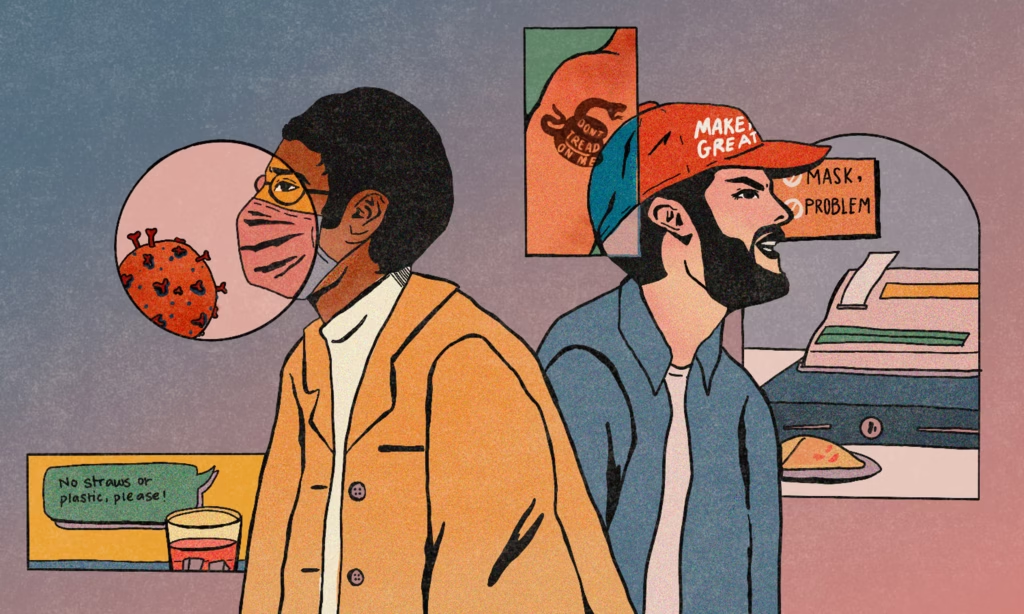
AP: I knew this book would be more challenging than other projects I’ve worked on in the past because it would ask me to strike up conversations, and some degree of familiarity and relationships, with people that I really disagreed with. In a field like ours, it’s one thing to take for granted that anthropology invites and even requires us to establish relationships with people in places we just don’t know that well. But the question of what to do in the face of deep disagreement, sometimes even a sense of aversion or disgust — which is a feeling that is very much alive in our politics right now — what one does with an anthropological sensibility in mind, in the face of such deep manifestations of difference, is a real challenge.
In the case of that chapter, and that particular person who I got to know quite well over some years, I certainly lament the impasse that we fell into. That and other chapters in this book took me to places, and to the company of people, that wound up presenting as almost impossible connections. We often think of the value of what we do as anthropologists as somehow finding a way to connect empathetically with people that we’re less likely to connect with. But I also think that there’s a value to simply trying to make those connections in good faith, and just attesting to the difficulty that those relationships might represent. Simply bearing witness to conditions that make certain forms of understanding impossible, I think, has a lot to tell us about why certain forms of misunderstanding are as prevalent as they are. So I think that every moment of failure and impasse in the book is also a chance for a different kind of anthropological insight.
CS: Were you surprised at Frank’s reaction to your draft? Is that not what you had expected?
AP: It was really hard. In that chapter, I write about how the piece that eventually appeared in The Guardian was almost like a Rorschach test, where different people saw exactly the opposite thing, like one of those ink blot images. Depending on what you’re looking for, you saw a different thing. That’s just where we are right now — a difficulty of reality that we encounter in all kinds of ways these days.

AG: I was thinking about some research that Ron Duncan Hart, a Jewish, progressive/anti-racist, white anthropologist, did with white, mostly Baptist racists in the early 1960s in Atlanta. These kinds of challenging fieldsites, I think, are few and far between.
I’ve titled our interview, “Courageous Ethnography,” because I think often, for anthropologists like me who work in seemingly exotic places in the rain forest where we almost die of this or that tropical disease, people talk about about how brave we are. But, these are simple challenges. Either you get medicine or you don’t, you die or you don’t die. I think those medical risks are nothing compared to the kind of emotional courage it took for you to do your research. Your kinds of fieldwork challenges are so much more complicated.
Which leads to my next question. You are brutally honest in writing about Frank, but you’re equally honest about your own responses to the project, including your own and your wife’s frustrations and worries for your own safety — physical worries, like walking barefoot along highways, but also more socio-emotional and even existential worries as a scholar of color speaking with racists, attending white supremacist events. Writing openly about your professional fears and failures is something that I found really important, but really hard to do in the two memoirs that my husband and I wrote together. As an author, I found fear of shame before my peers a powerful, disincentive!
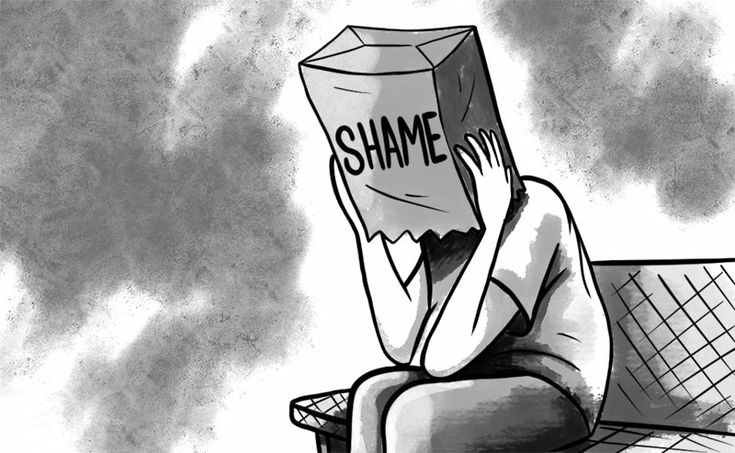
As my husband and I were writing Parallel Worlds, I reminded myself that I was writing more for students than for my colleagues. That convinced me to show more vulnerability than I might otherwise have been inclined to show.
I wondered how you overcame that anxiety, and what you think is the payoff.
AP: There’s so much at stake in who we think of as our peers and our readers — how we imagine the boundaries and the composition of the communities that we are writing for — the communities that we imagine ourselves and our words to be part of. Our academic cultures continue to have a lot of difficulty with certain forms of candor and vulnerability — which is highly ironic in the case of a field like anthropology, given our commitment to be as unflinchingly honest as we can about the human experience.
On the other hand, the work that we do as anthropologists takes us into spaces and into different forms of company far beyond our narrow academic worlds. I think part of what anthropology teaches us is to imagine all these other folks also as peers. If what we learn in their company has to do with existential predicaments having to do with a very real and very human sense of vulnerability and exposure and insecurity and difficulty in how we navigate all those things in the world, I think that we owe it to those folks to be as honest as we can in the writing we do about the real texture of those experiences, which ultimately have to do not only with their exposure but also with ours, as strangers in their midst. It just felt like the right thing to do.
With this book, I imagined I was writing as much for the people that I was talking with. So, how could I write in any other way?
AG: My next question is about a different topic. Having written long ago, myself, about menstrual issues, I was taken by your penultimate chapter. You take the anatomical shedding of walls that occurs biologically in menstruating women as a metaphor for the political and other walls that might be shed. I was intrigued by that comparison for many reasons!
For one thing, so few men — anthropologists or otherwise — write anything about menstruation. It’s a very gendered topic. I wondered what inspired you — either as a male, or just as a human — to think so creatively about walls via menstruation?
AP: There’s an enormous amount of creativity and insight already out there in the worlds that we’re trying to make sense of as anthropologists. It’s not that things are just happening in some inchoate manner on their own, and it’s up to people like us to put the pieces together in a manner that makes sense. People are making sense of their lives in all kinds of creative and meaningful ways — sometimes in ways that can be radically transformative. That’s what was going on here.
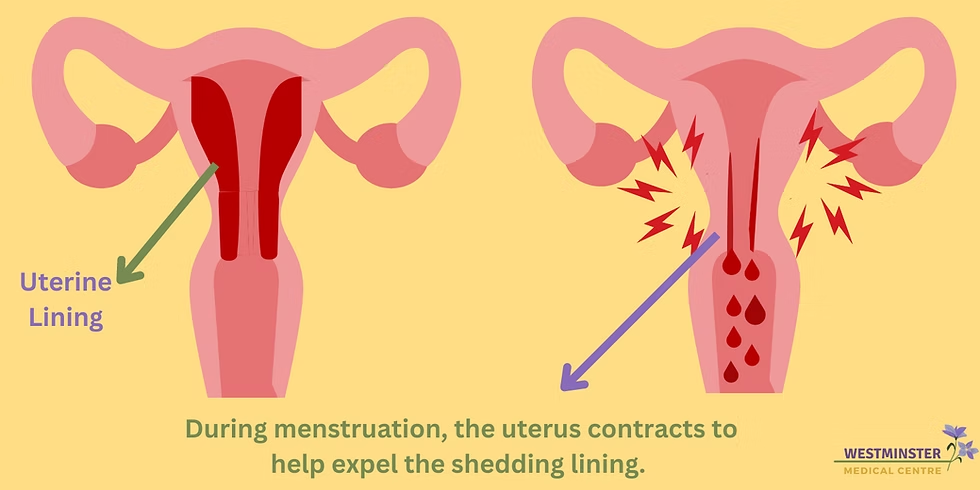
The realization that there might be a relationship — conceptual, imaginative, but also practical — between the kind of wall-building and suspicion that has come to govern the politics of immigration in this country, and the kind of wall building and suspicion that, for so long, has governed the way in which human realities like menstruation have been sidelined as private phenomena to be acknowledged very covertly, or only by certain people in certain contexts — that realization is one that folks in the menstrual rights movement made. It came into prominence in the early days of 2017, with the first of those women’s marches in D.C., with the viral spread of one particular slogan: “Shed walls, don’t build them.” That was already at work in those spaces as a slogan that crossed over between the biological reality of menstruation and these other forms of shaming and wall building that people were simultaneously concerned with exposing and questioning. That was already out there.
AG: I remember being especially delighted by that slogan when I saw it on signs at the Women’s March! Unfortunately, I didn’t manage to grab a photo of it for the blog post I wrote analyzing some of the incredible posters I saw at that march.
AP: So, all I’m trying to do in that chapter is call more attention to the genius that we find already in social life, and the different forms of transformative action that radical movements are already at work in forming. It felt important, a unique and powerful way of not only calling attention to the need to build bridges, but also to do so in a way that defused the highly misogynistic nature of the politics of exclusion that had gained so much prominence in the country. So, it was really a deference to the deeply imaginative nature of what those young women leaders were doing. I thought it would make sense to try to bring the book to a close with a story like that one.
CS: Speaking of the end of the book and the idea of walls, I was really interested in your conclusion. You write: “Boundaries are ubiquitous and essential and human cultural life. Walls, on the other hand, represent a refusal to relate altogether.”
That got me thinking: What distinguishes a boundary from a wall?
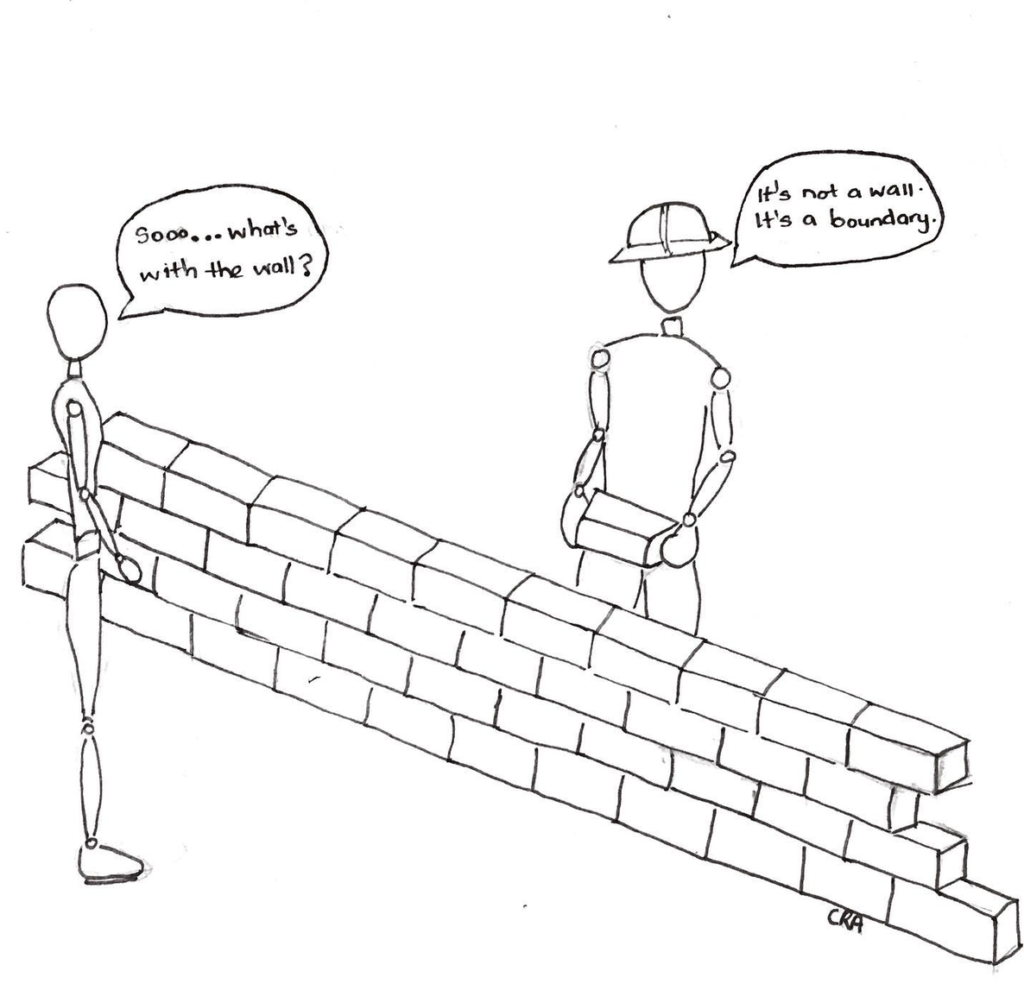
For me, as a political activist, it’s a practical issue. When conservatives or progressives join groups where they can be with others who share their own politics, are they creating healthy boundaries? Or, are they putting up a wall?
AP: This is a really important and difficult question that all of us have to wrestle with. It’s easy for us to imagine that social and political impasses ensue from the problems that other people have out there. But it’s often the case that what we find manifest elsewhere may also manifest in difficult and problematic ways closer to home. Certainly, that was a lot of what was at stake for me in the journey of this book — acknowledging that I was in an echo chamber or bubble, myself. I had become so accustomed to only taking certain kinds of voices or perspectives or opinions or positions seriously that, for the life of me, I couldn’t even reconstruct how something else other than what I took for granted might actually have traction in the world. That was the work that I needed to do.
This question of walls and boundaries ultimately has to do with the extent to which we are willing to entertain the possibility of relationships with others unlike ourselves — the extent to which we hang onto the possibility, and maybe even the necessity, of maintaining relationships, connections, conversations, openings with others whose places and points of view on the world may be very different from ours.
For a variety of reasons that I talk about in the book, I think it’s become way too easy to meet the fact of difference with a gesture of wall building. It’s become habitual, it’s become convenient, it’s become easy in all kinds of ways that might feel acceptable in the moment — but that, I would say, ultimately make the project of social life in a polity that is constituted by differences of all kinds all the more difficult. That’s the kind of challenge that I’m wrestling with in the book.
CS: I so understand that because that’s what I’m trying to do in the research I’m doing now — it’s exactly the same project.
On the one hand, I have my anthropological side: I just want to talk to people who are different, understanding where they’re coming from. Then, there’s my political activist side. I organize progressive group meetings, and I have people say to me afterwards, Oh, it was so good to be with other people who share my politics.
AP: I do organizing myself, so I know exactly what you’re talking about. Sometimes you do need to create those more intimate spaces where you can take more things for granted. But it can’t be all you do.
AG: Some years ago, I remember reading a disturbing study by psychologists of Americans. Aside from all the obvious boundaries that divide people — socio-political, religious, ethno-racial, linguistic, class — they found that the most consistent predictor of friendships was body size. People who have a given body size overwhelmingly tend to gravitate towards other people with the same body size for their closest friends.
[This isn’t the study I remember reading, but it offers some similar conclusions: “Some Friends Matter More than Others: BMI Clustering among Adolescents in Four European Countries.”]
The worrisome lesson from that study: If we’re not comfortable with other body sizes, how could we be comfortable with much more existential, institutional differences?
Which brings me to Mary Douglas.
I’m not sure you cite Douglas in the book, but I wonder if you think her perspective on the symbolic power of pollution ideologies might help us explain the current moment in the U.S. Would it make sense to view the sorts of socio-political/architectural/symbolic walls that you explore in the book as a kind of taboo that we follow out of emotional habit, the way we might follow other taboos?
AP: I’ve learned a lot from Mary Douglas over the years. I actually taught a class on pollution a couple of years ago, in which we began by reading Purity and Danger together. I think there’s an enormous amount we can continue to learn from that book.
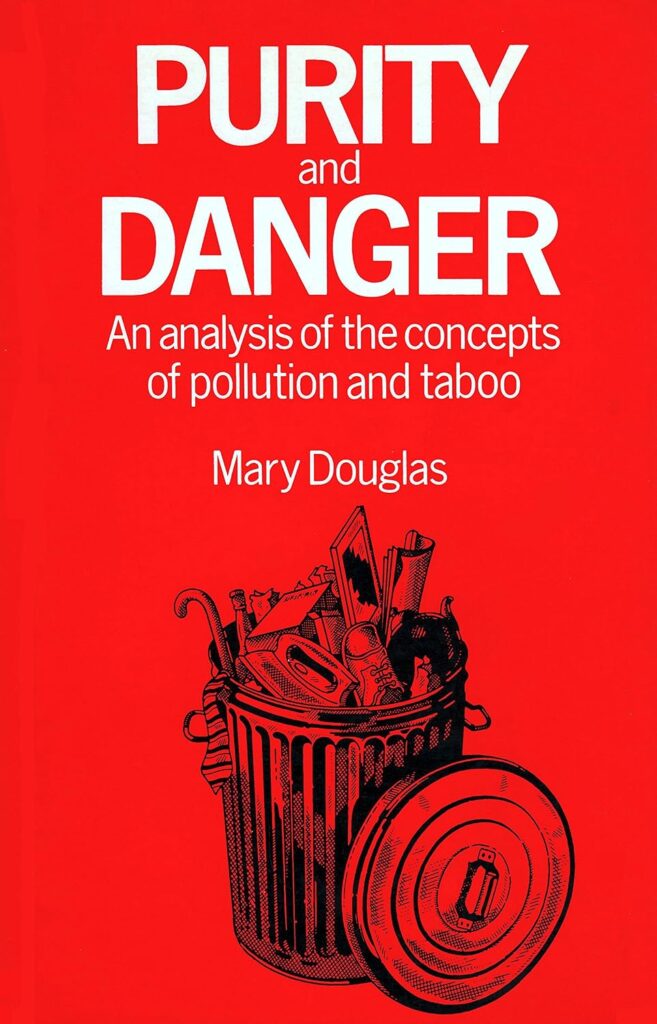
In fact, using that word “structuralist” a little loosely, I would say, there’s an enormous amount we can learn from structural analysis more generally.
I would count a number of structural thinkers as quite influential in the way that I do anthropology. Lévi-Strauss, for example, is another person that I feel like I’ve learned a lot from over the years. Training as a South Asianist, when you talk about ideas of purity and pollution, Louis Dumont was someone I had to think a lot with in graduate school and my earlier work. I think that there’s a great deal of value in core anthropological insights that arise from our attention to some of these basic structural or symbolic coordinates, and their organizing force in terms of motivating and making sense of social life.
At the same time, I think there’s a lot at stake in the question of how we imagine these structures and polarities to actually operate in the world. The argument that I’m making in the book is that certain suspicions of those on the outside, or a certain kind of commitment to life on the inside as opposed to life on the outside, seems to run like a pattern through so much of contemporary American life. But what I’m saying is that it behooves us, as well, to try to make sense of why these patterns have the salience that they do. They might not have had the same power, had they not been embodied in the different infrastructures of daily life, whether it’s the structure of our names and neighborhoods, or the way we move about in the world, or our body cultures, or the silos of our information economies. All these different, more quotidian structuring forms and devices have a lot to do with the salience of a more categorical distinction. That is, I think, ultimately what I’m most interested in: the relationship between categorical distinctions and everyday manifestations of distinction or difference. Because, ultimately, I think it’s through the latter that the former become operable. If we want a society that approaches the challenge of difference in some other spirit, we have to look at, and begin to loosen up and change, our relationship to those more quotidian forms of distinction. There, once again, the attention of someone like Douglas to everyday habits and presumptions is really interesting and important to keep in mind. But there’s a lot at stake in the specific form that those habits assume.
AG: I think all that that becomes very clear in your book: in your choice of field sites; in the way you conduct the conversations; in how you report how you conduct the conversations; and in how you report your own internal state of mind in processing those conversations.
CS: You’ve also done research in India. How would you compare the social infrastructures you observed in South India with what you’re finding in the US now?
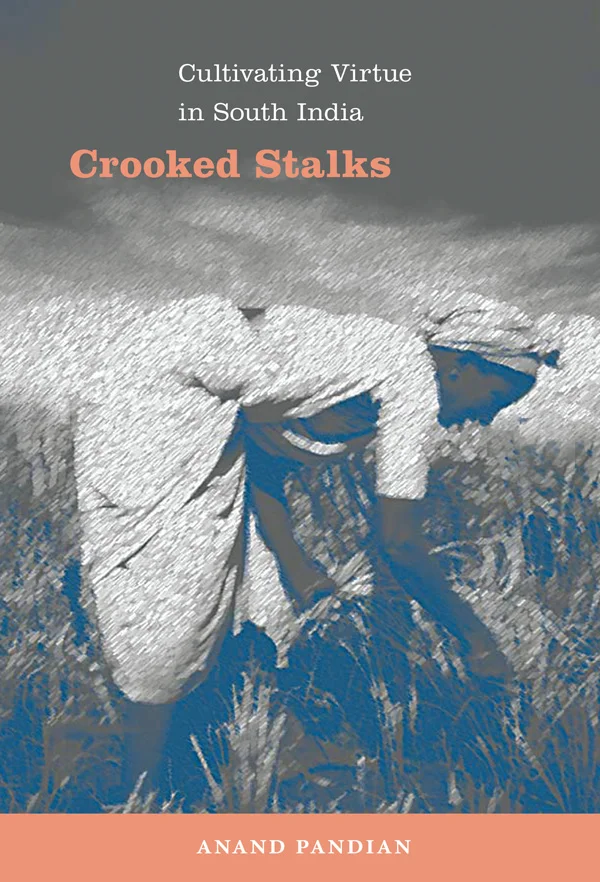
[On his website, Anand writes that his book, Reel World: An Anthropology of Creation (2015) — based on fieldwork with Tamil filmmakers, artists, musicians, and craftsmen — grapples with the turbulent ecology of creative process; Ayya’s Accounts: A Ledger of Hope in Modern India (2014) takes my grandfather’s life in Burma and India as an aperture for a century of tremendous aspiration and upheaval; Crooked Stalks: Cultivating Virtue in South India (2009) explores postcolonial landscapes, and the ethical lives of those who tend them, as fields of moral and agrarian cultivation.”]
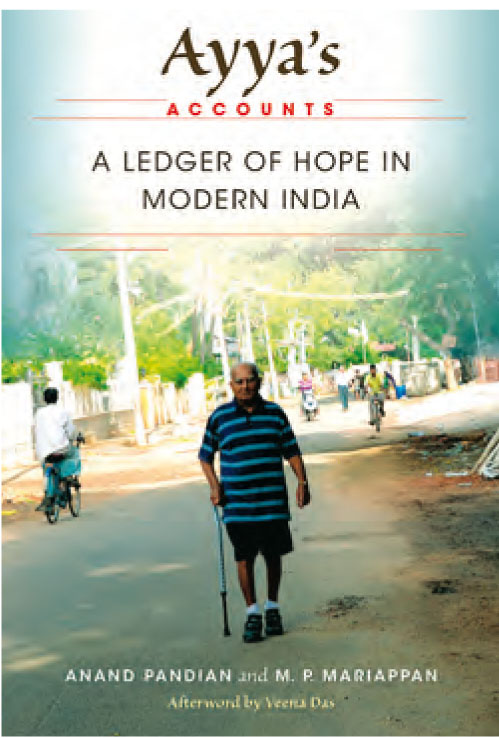
AP: Exclusionary nationalism is now a global phenomenon. We see a more xenophobic nationalist politics that is deeply hostile to various forms of difference really gaining momentum in many places around the world — including in India, whose politics has been so thoroughly dominated and disturbed by the rise of Hindu nationalism in recent years.
It’s also the case that the empirical phenomena that I described in the book with regard to gated communities in the U.S. — SUVs and other larger vehicles; the ubiquity of plastic water bottles; the dominance of polarizing information, architectures, and social media — all of these things are global realities whose consequences people are wrestling with in all kinds of ways — including in India.
At the same time, as an anthropologist of South Asia, and someone who’s learned about human experience from some really important experiences I’ve had in different parts of India — in particular, in rural environments in India that are really different from the American suburbs that I grew up in and took for granted as an Indian-American kid in Los Angeles — I learned an enormous amount about the real contingency of how different human societies organize this basic relationship between life inside and life outside, through that fieldwork — the various rounds of fieldwork that I’ve done in India over many years and in different ways, beginning with my first book, Crooked Stalks.
In India, I confronted a much more fluid relationship between the inside and outside of cultural life. I learned to think about that relationship in more fluid terms, and to think about the ways in which that fluidity manifests in all kinds of ways — conceptually and imaginatively, on the one hand, but also materially — in spaces like verandas and courtyards and village squares and other spaces where those lines get complicated.
All of that gave me a lot of perspective when it came to things that I think we’ve taken for granted in the United States. I don’t know that I would have seen the things that I noticed and wrote about in this book had I not had that kind of ethnographic familiarity with a very different way of imagining the relationship to the inside and outside of things. Had that not been a part of my intellectual makeup as an anthropologist, I don’t know that I would have noticed the power structures that I wrote about in this book. So, although I don’t write very much about India in the book, what I’ve learned in India has an enormous amount to do with what wound up in Something between Us.
AG: A fun aside: My writer-husband Philip Graham has a very similar response when he’s asked, What impact did Africa have on your writing? Because you don’t seem to write very much about it in your fiction. He always answers, Yeah, but it’s everywhere, it’s suffused everything I write.
Returning to the globalization of xenophobia, it seems so ironic that the more our world is potentially enlarged through the Internet — to the point that we can talk to anybody at any moment around the globe — the less comfortable we feel with that, and the more we’re making micro-boundaries even to the point of the water that we drink. It’s such a bizarre irony.
CS: It could be a different we at different times.
AG: Yes, true!
Last question. On your Hopkins website, I found myself fascinated by the range of courses you’ve taught, including that pollution course.

Among other roles at Hopkins, you’re also involved in the Ecological Design Collective, whose striking sub-title is: A Community for Radical Ecological Imagination and Collaboration. Your own undergrad studies started out in environmental issues. That ecology initiative at Hopkins seems a really creative project meant to forge ways for anthropologists to contribute productively to producing a better world.
I’m also mindful that you’ve described the thread linking all your amazingly diverse ethnographic projects as consisting of an ongoing anthropology of the open mind, which I love — a mind “open to the difference and uncertainty of a wider world, committed to the significance of transformative encounters and relations.”
All of which leads me to wonder: Given the research you’ve conducted on the walls — physical and metaphorical — that Americans construct, are you optimistic that we humans can create new means for communicating across barriers? And, are you optimistic that we anthropologists can contribute our own openness of mind to the difficult conversations that our troubled society and troubled world need to have?
AP: The book is called Something between Us for two reasons.
On the one hand, there is this sense that I explored in the book of barriers that intercede and make relationship difficult, if not impossible. On the other hand, there remains the reality of underlying continuities and relationships — and, if not relationships, then at least the reality of a common fate that we necessarily share with those we may not have much in common with, or may not agree with, or may not even want to share space with. And yet, we do — in one way or another, at one scale or another.
The smoke blowing back and forth across the US-Canada border from the recent wildfires is just one tangible reminder of those interwoven realities. The more hopeful moments and chapters in the book have to do with what I learned in the company of people organizing for justice of different kinds in the face of these divisions we’ve been talking about — environmental justice, racial justice, gender justice — as we’ve been speaking of already in this conversation.
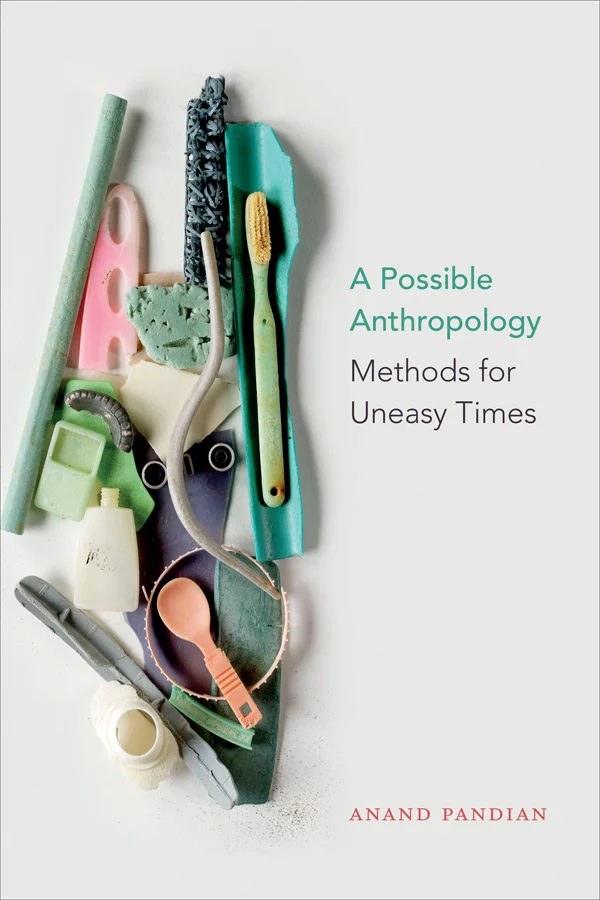
I think there’s a lot at stake in the question of what we as anthropologists can do in the company of others. I argue in another recent book of mine, A Possible Anthropology, that there is something deeply pragmatic about the way in which we engage with humanity as anthropologists. Humanity isn’t simply an object of study in a field like ours. It’s a space of play. It’s a moving horizon we are also engaged with. Our work can be deeply transformative — as we see time and again when we follow what happens when anthropologists take seriously what they can do as storytellers, what they can do with their experiences, when we see the evidence of the difference that stories and experiences from elsewhere can actually make in the face of realities that otherwise seem fixed and stuck and impossible to broach.
So, we are in that effort in one way or another. I think that there’s a lot at stake in the relationships we continue to build, the horizons we seek, that are forms of transformational possibility, who we ally ourselves with. I think there’s a lot we can do in a spirit of solidarity. I feel lucky to have seen the value of some of that in the research that led to this book, but also to be able to practice a bit of that in my own professional work as an anthropologist. It’s involvement of that kind that continues to give me hope that we can and should be moving in other directions.
AG: I became an anthropologist out of utopian aspirations, myself. Coming of age in the generation that was protesting everything — racism, sexism, imperialism, every week out on the streets protesting against the Vietnam War — I was constantly thinking, There has to be a better way to organize society.
To me, your book speaks to that impulse from its own positionality. Maybe that’s why it’s resonated so much with me. I was hoping you would give an answer like the one you just did!
This has been wonderful. Thank you!