
Election Guide for Immigrants: Cape Verde Edition
Only 40-50% of adult U.S. citizens vote in the midterms (U.S. Census Bureau). Perhaps the other 50-60% wonder: Midway between what?
Statistics for participation in primaries are twice as dismal: A scant 20% of eligible voters in the U.S. typically vote in the primaries (Bipartisan Policy Center). https://aceproject.org/ace-en/topics/pc/annex/pcy/primary-elections-in-latin-america/mobile_browsing/onePag
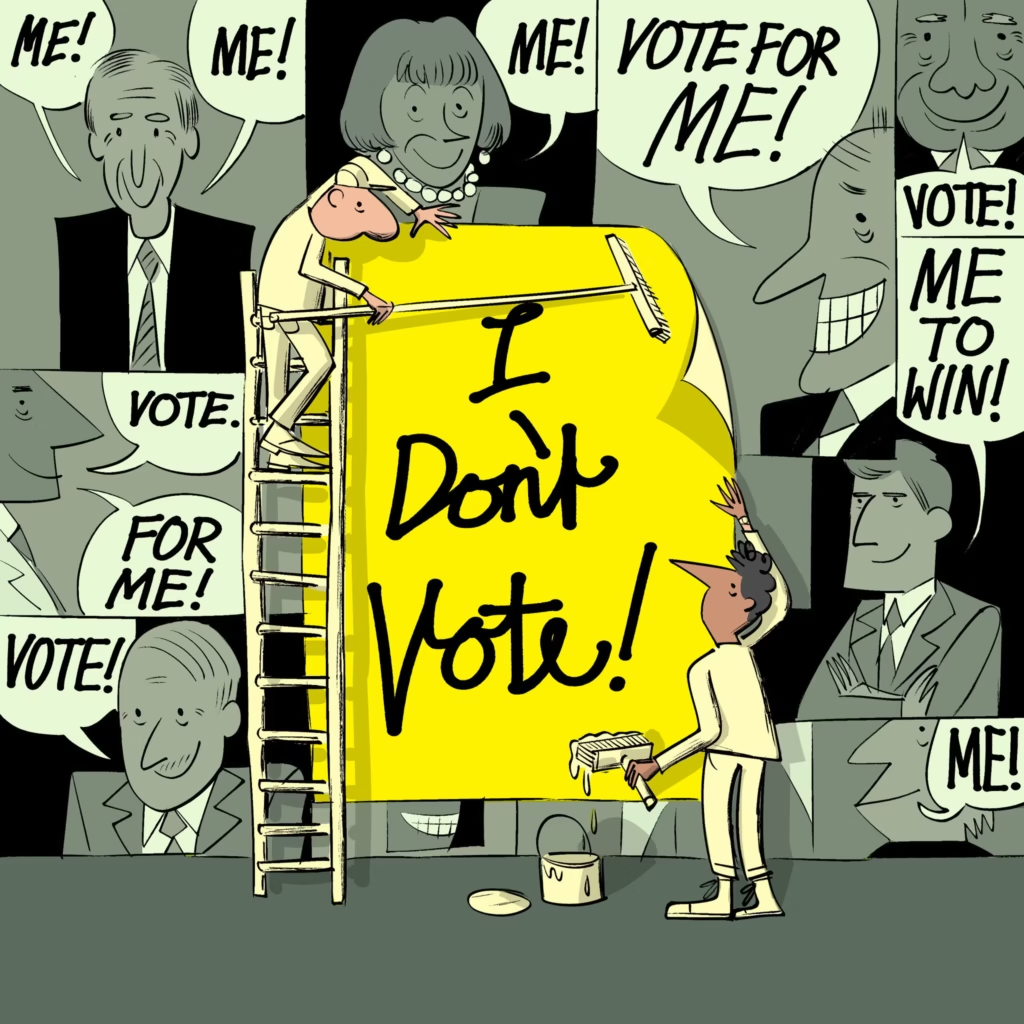
Only three other democracies — Argentina, Chile, and Uruguay — allow citizens to regularly choose a party’s candidates for the general-election ballot (Ace Project: The Electoral Knowledge Network). In the U.S., why does only a tiny minority take advantage of that rare opportunity?
Well, over two-thirds of Americans don’t understand what is meant by “separation of powers” (American Bar Association), while over 70% of Americans “fail a basic civic literacy quiz on topics like the three branches of government, the number of Supreme Court justices, and other basic functions of our democracy” (U.S. Chamber of Commerce). With schools teaching fewer and fewer classes in basic civics — graduating students who will become under-informed adults — how can we expect eligible voters to know the nuances of election cycles?
The situation is worse among established immigrant communities. Take the case of Cape Verdeans, who have recently come into the spotlight because of their Cinderella story in the World Cup (Soccer News). A Cape Verdean-American colleague who has observed voter behavior for nearly three decades predicted that fewer than 5% of his compatriots would vote in this fall’s primary and midterm elections.
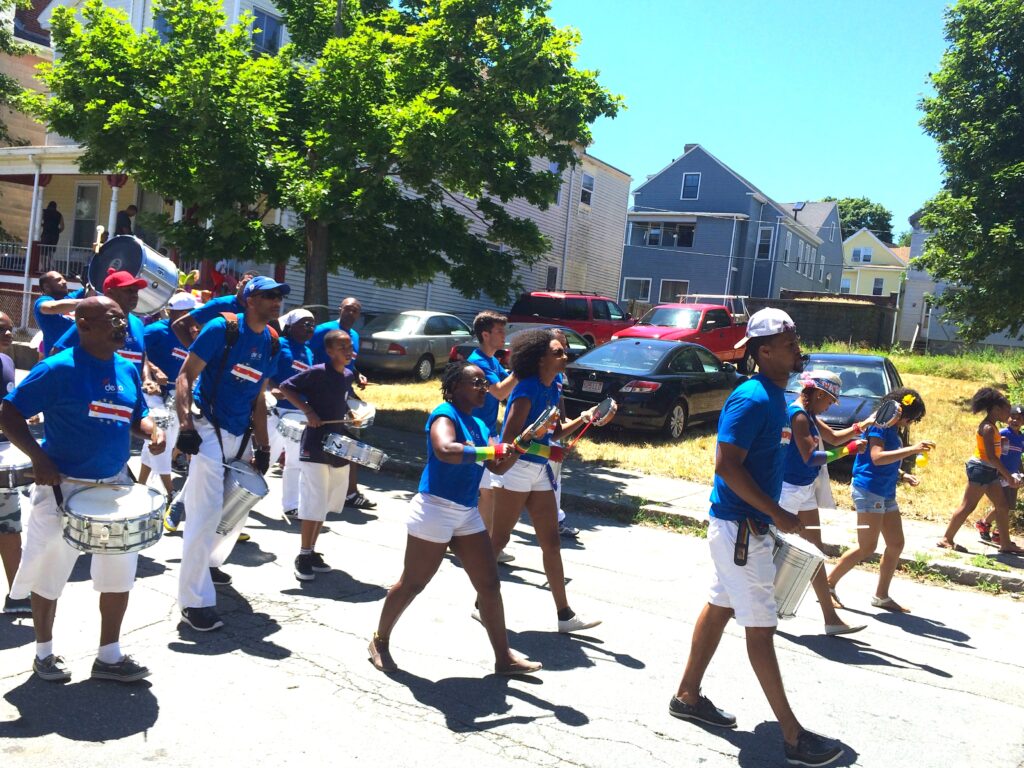
As an anthropologist, I have been working with this community in New England since 2008 and am actively involved with their civic organizations. Getting to know their lives, hopes, and challenges has given me boundless respect for them.
Children who translate for their immigrant parents during meetings with teachers and doctors. Teens who work after school to contribute to the family budget. Young adults who live as caretakers with aging grandparents. Adults who juggle two or three jobs while taking online courses for yet another degree or certificate. Seniors who care for grandkids while parents work. And, between job and school responsibilities, these overworked immigrants volunteer for every cultural event in their neighborhood.
Considering how much they offer their families and communities, why don’t Cape Verdeans vote in U.S. elections after working hard to achieve U.S. citizenship?
A frequent barrier is language. But even for fluent English speakers, understanding the details of the U.S. electoral system proves tricky.
Am I automatically registered to vote? If I vote in the midterm, should I still vote in the “general”? What is a “councillor at large”? And, who can explain all this for me?
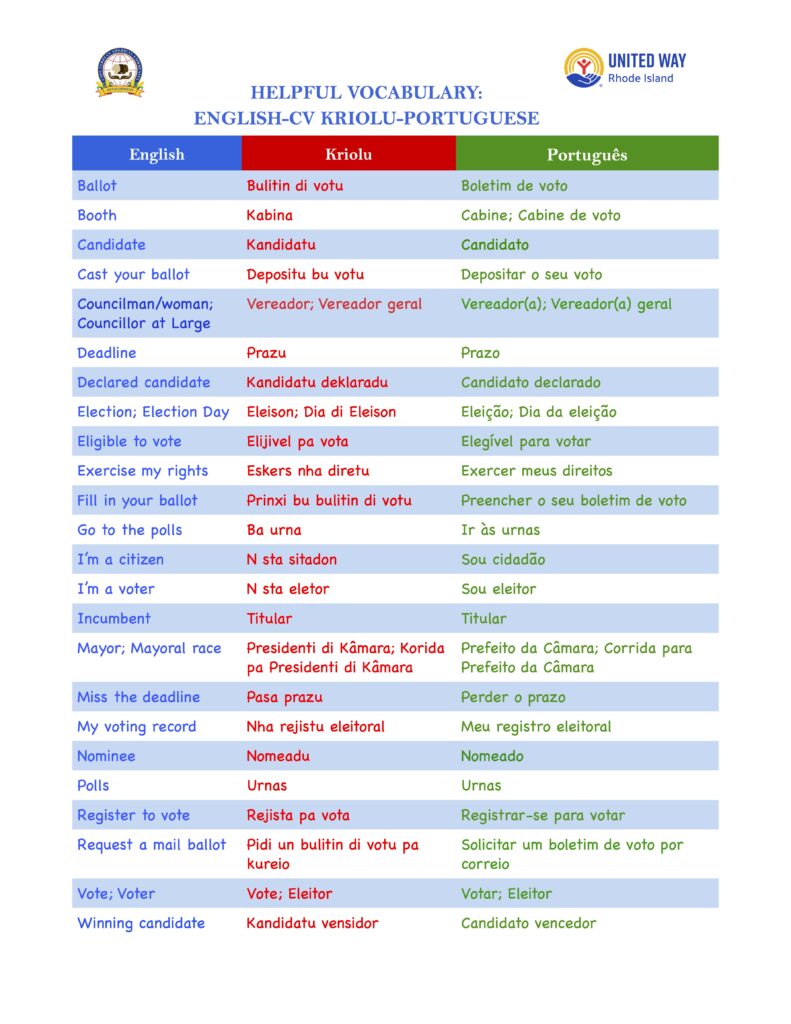
To answer common questions, I assisted a team of Cape Verdean colleagues I volunteer with, at Capeverdean American Community Development (in Pawtucket, RI), to create what turned into a 20-page election guide — bilingual in English and Portuguese, supported with a modest grant from United Way of Rhode Island. Our first order of business: assembling a list of 25 English words and phrases key to understanding what goes on in an American voting booth. Then, we translated these terms into Cape Verdean Kriolu and Portuguese, since most Cape Verdeans are likely to know at least one of these languages.
That was a good start. But translation involves far more than just language. Now, I could go into high gear as an anthropologist. Cultural translation is key to global mobility. And that shifts across generations.
As with many other demographic groups in the U.S., older Cape Verdeans are more likely than youth to vote (Pew Research Center). Yet, if elderly immigrants are told by someone in authority that they must — or must not — do something, many comply without protest. No doubt, they remain traumatized by having lived under Salazar, the Portuguese dictator who ran the country and its colonial empire for nearly 50 years before being ousted in 1974 (Lisbon Listicles). Having been raised to respect the authority of both church and state, these seniors find themselves easily intimidated by America’s confusing bureaucracy. That leaves them open to abuse. When Cape Verdean home owners in the U.S. are informed that they should not display signs supporting a particular candidate, they remove the signs.
So, we developed a four-page “Know Your Rights” handout to inform immigrants of all sorts of rights of which they might have been unaware — including the rights of those who are homeless, disabled, or non-native English speakers:
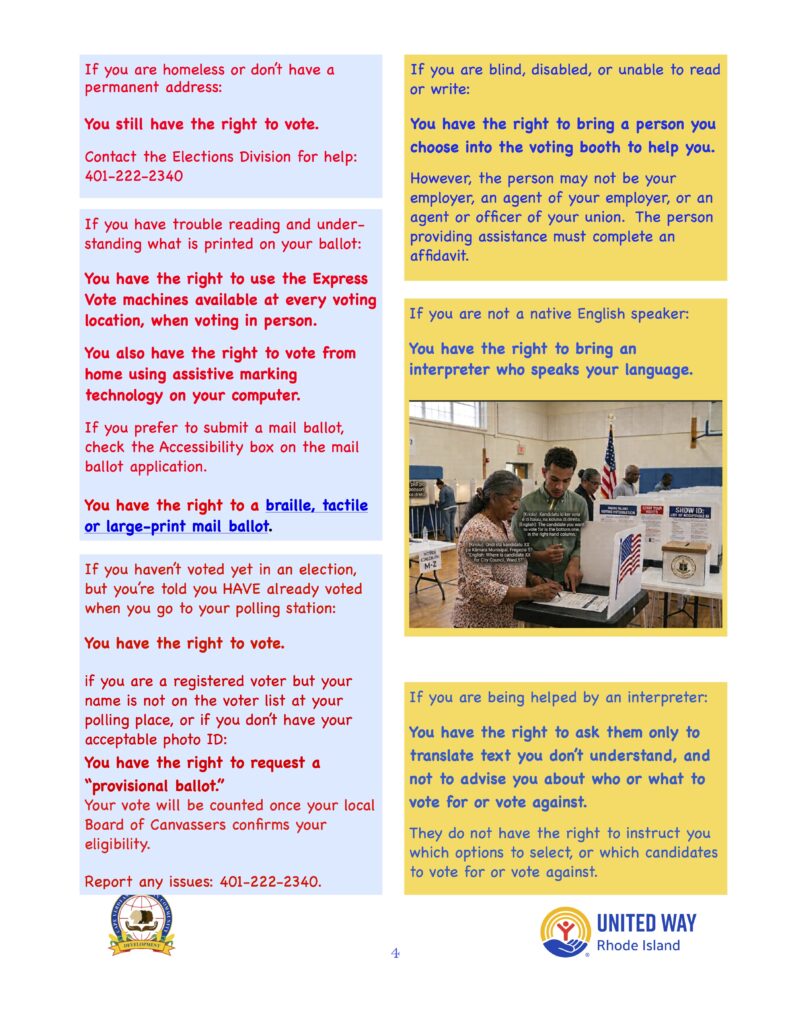
In empowering new citizens to resist illegal bullying, we wanted our election guide to offer new ways of thinking about immigrants’ relationship to the state: not as obedient subjects, but as citizens of a government made “by the people and for the people.”
*
Another issue is understanding a political system so different from that with which they were familiar in Cape Verde — including primaries and mid-terms, which do not exist in Cape Verde. So, we proposed a metaphor that would make sense to our soccer-loving readers:

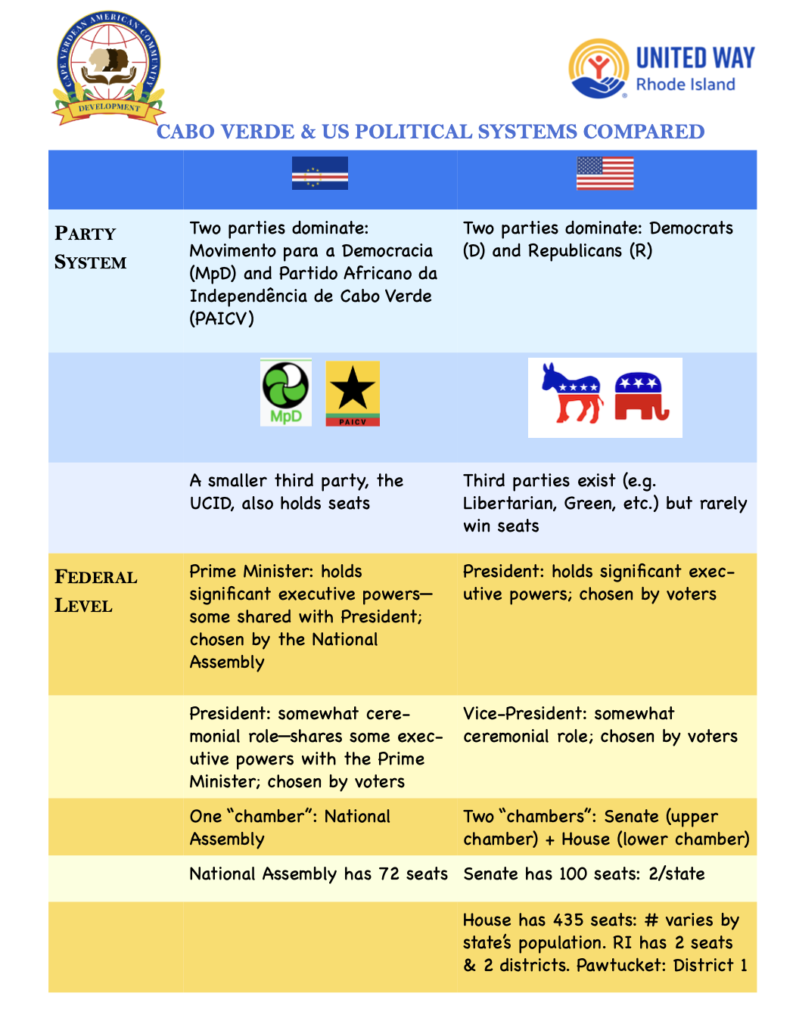
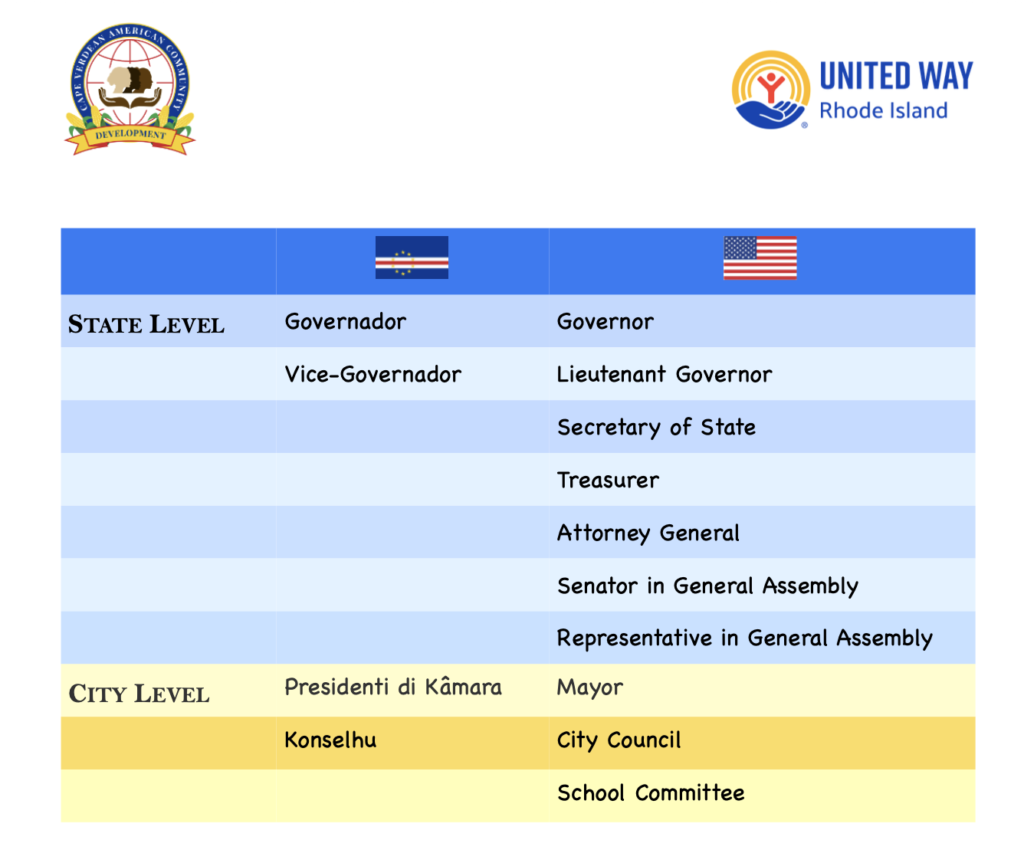
In fact, we assembled a long list of comparisons between the U.S. and Cabo Verdean political system, to explain what is parallel and what is different, so new citizens would understand the offices they would be voting for, beginning at the federal level:
And continuing on to the state and city levels:
An equally tricky source of confusion turns out to be the absurdly simple question: Where do I vote? Alas, we could offer no straightforward answer to this reasonable inquiry.
Our guide explains that for anyone who wanted to vote in the primary, where they would vote was different from where they will vote on Election Day. To help voters in the city of our organization’s headquarters, we listed the 28 polling places designated for the upcoming primary, accompanied by a map showing the city’s six wards. But we warned that any of these may change from year to year. Unfortunately, the same is true of any district in the U.S.

When to vote is equally convoluted. This year, “primary” elections were scheduled anywhere from March 3rd (Arkansas, North Carolina, Texas) to September 15th (Delaware). And, while “early voting” isn’t even an option in some states (Alabama, Mississippi, New Hampshire, Oregon), elsewhere, the start date of “early voting” can vary from September 24th (Illinois) to October 5th (California), while the end date can go from October 30th (Arizona) to November 3rd (Alaska).
To ensure that immigrants coming from a country that uses a different order to write dates understood all this, we include a brief “translation” of written date formats:


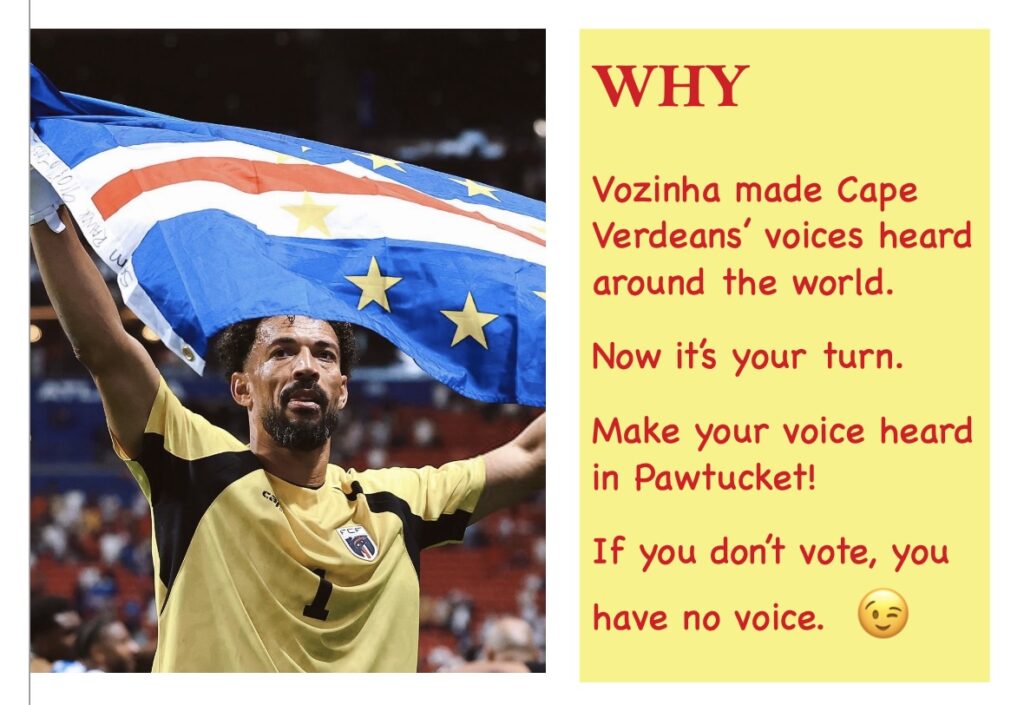
Beyond confusion over such convoluted but critical details, like many other Americans, some Cape Verdean immigrants don’t vote because they feel disengaged from the process, even cynical about their vote having any impact on their lives (Vertex Legal). To address these feelings, we appealed to current community pride in soccer’s newly legendary, Cape Verdean goalkeeper:
*

One might well wonder why the seemingly simple facts of where, when, and how to vote are so very complicated.
That’s a larger question deserving to be addressed in a country claiming to be a democracy.